Lord Rennard apology 'delayed until after elections' to help Lib Dems
Lord Carlile said the peer requested his apology be held back
Sign up for the View from Westminster email for expert analysis straight to your inbox
Get our free View from Westminster email
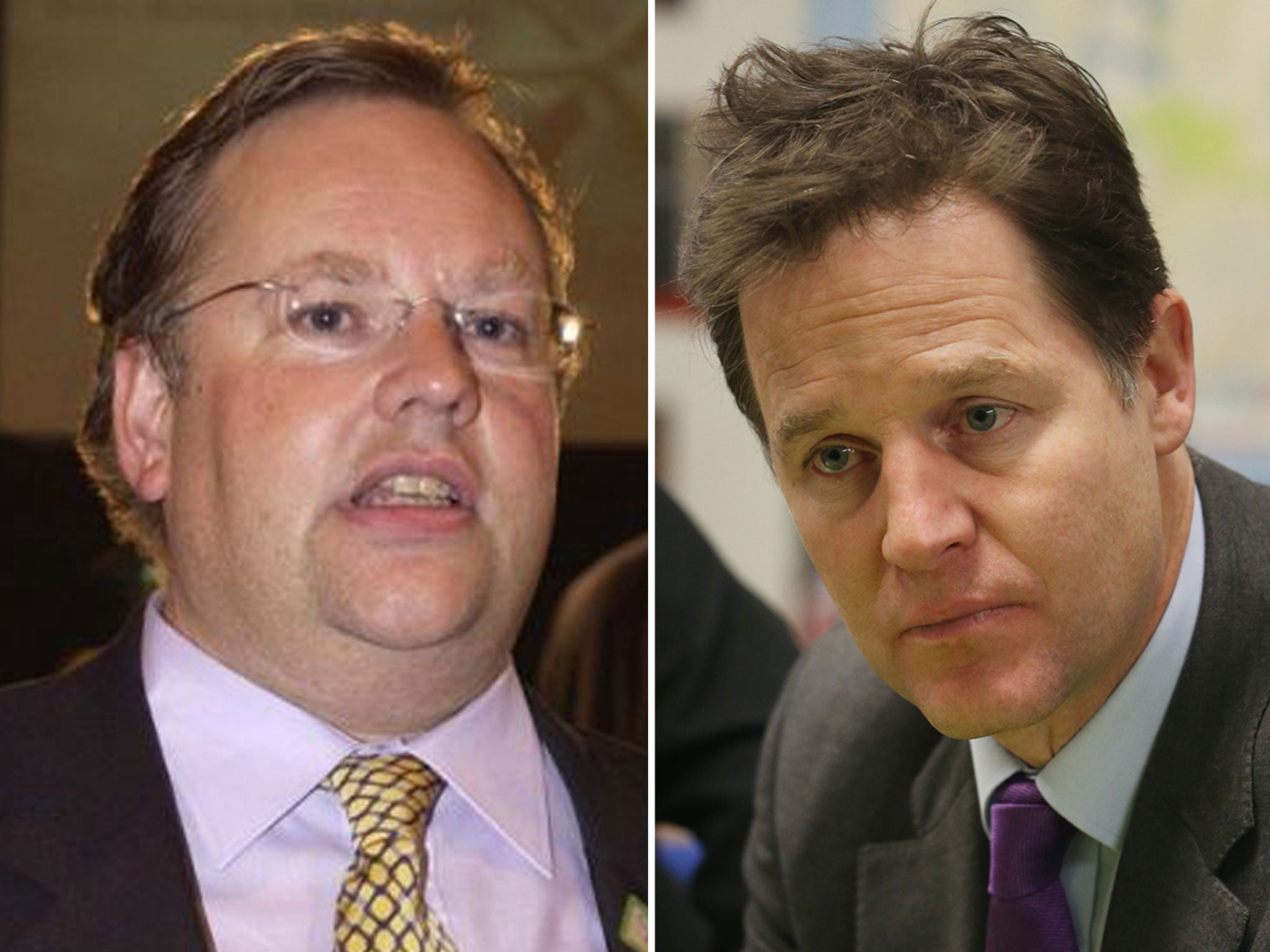
Lord Rennard’s apology to four women who accused him of sexual harassment was not made public for weeks so it did not damage the Liberal Democrat’s election prospects, it has been claimed.
A legal adviser to the party’s embattled former chief executive said Nick Clegg did not release the statement until after last week’s European and local elections at Lord Rennard’s request.
Lord Carlile, the peer’s legal adviser, told BBC Radio 4’s The World At One: “Lord Rennard was absolutely very concerned personally not to do any possible damage to the party in the run-up to last week's local and European elections.
"So although this apology was seen for example by the party leader weeks ago now it was held back until the elections were over."
He said Mr Clegg had “absolutely not” told Lord Rennard to hold back his apology.
The delay did not seem to help the Liberal Democrats, who had a disastrous showing at last week’s elections, losing 11 of 12 MEPs and 307 councillors.
Mr Clegg has since faced calls to resign and reportedly withstood an attempted leadership coup.
Lord Carlile claimed the Deputy Prime Minister and party president Tim Farron put out "misleading" press releases calling for Lord Rennard to apologise for his actions without seeing the independent report into the peer's behaviour by Alistair Webster QC.
The party inquiry concluded that “no further action” was necessary but called on Lord Rennard to apologise.
The peer denied any wrongdoing for more than a year after the complaints surfaced and police dropped an investigation into the allegations.
Mr Webster found no breach of party rules could be proved beyond reasonable doubt, and merely suggested Lord Rennard should say sorry to the four women - Susan Gaszczak, Alison Goldsworthy, Bridget Harris and Alison Smith.
When he refused, he was suspended in January for bringing the Lib Dems into disrepute.
Three of the four women have appealed against the findings of Mr Webster's report, while Lord Rennard has appealed against the disciplinary process for bringing the party into disrepute by his failure to apologise.
Allies have demanded his membership is reinstated but speaking on The World At One, Ms Harris said he should be expelled.
She said: "He has been shown to have on many occasions acted completely and deeply inappropriately towards women and has taken advantage of his position as a very powerful member of the Lib Dems to do so.
"I think it's a fairly cut and dry case that the party as a whole should accept that they no longer have their favourite campaigner working with them and instead they have to ask him to leave and I think it's as simple as that."
Additional reporting by PA
Subscribe to Independent Premium to bookmark this article
Want to bookmark your favourite articles and stories to read or reference later? Start your Independent Premium subscription today.
Join our commenting forum
Join thought-provoking conversations, follow other Independent readers and see their replies